


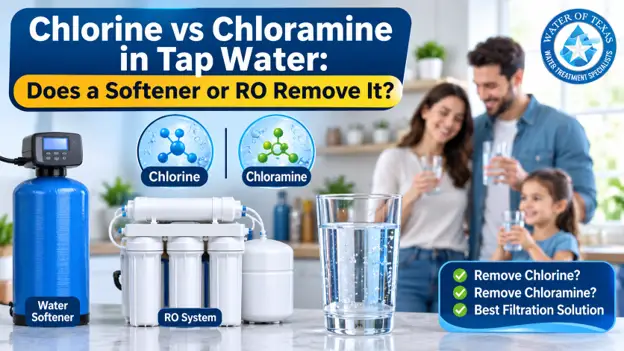
Key Takeaways
- Disinfectants such as chlorine and chloramine are used to assist in controlling harmful microorganisms in public water supplies.
- A standard water softener removes hardness minerals, not chlorine or chloramine.
- Activated carbon can reduce chlorine, while catalytic carbon is often used for more effective chloramine removal.
- Reverse osmosis (RO) systems may need appropriate carbon pretreatment to address chlorine or chloramine.
- Select the filter based on the level of water quality, the purpose of the water treatment and established effectiveness in eliminating unwanted contaminants.
Tap water undergoes disinfection before reaching your home. Depending on the water utility, that process may use chlorine or chloramine to control microorganisms throughout the distribution system. While both serve an important purpose, homeowners sometimes notice a chemical taste or odor and wonder whether their existing filtration equipment can remove it.
Understanding the difference between these disinfectants can help you select the right treatment system. Water of Texas helps homeowners explore water treatment options based on their household needs and water quality concerns.
What Is the Difference Between Chlorine and Chloramine?
Chlorine is a widely used drinking water disinfectant that helps control harmful microorganisms. It can also react with naturally occurring organic matter in water, potentially forming disinfection byproducts.
Chloramine is typically formed by combining chlorine with ammonia. Utilities may choose this approach because chloramine provides a longer-lasting disinfectant residual as water travels through distribution pipes.
The process, known as chloramination of drinking water, helps maintain disinfection across the water supply network. Both disinfectants are used to protect public health when managed within applicable drinking water standards.
However, chloramine in tap water can be more challenging to remove than free chlorine. The treatment method that works well for one disinfectant may not perform equally well for the other.
The US Environmental Protection Agency explains how chloramines are used in drinking water, including their role in maintaining disinfection.
Does a Water Softener Remove Chlorine or Chloramine?
A standard water softener is designed to reduce water hardness by exchanging calcium and magnesium ions for other ions, commonly sodium. It is not designed to remove disinfectants.
Therefore, if you are wondering does a water softener removes chlorine, the answer is no—not through the normal softening process. The same applies when asking whether a water softener removes chlorine or chloramine from household water.
A softener can help address scale buildup, mineral deposits, and some hard-water-related problems. However, removing chlorine or chloramine generally requires a separate filtration stage designed for that purpose.
If your main concern is disinfectant taste, odor, or protecting compatible downstream equipment, consider a suitable carbon filtration system alongside your softener.
How to Remove Chloramine From Water
Choosing the right chloramine treatment depends on the amount of chloramine present, the required water flow, and whether you want to treat drinking water at one faucet or water throughout the home.
1. Activated Carbon Filters
Chlorine can be removed, and taste and odor in water can be enhanced using activated carbon. It is effective against chloramine, but this will be dependent on the type of carbon, contact time, water chemistry, and filter design.
For some applications, a standard carbon cartridge may not be able to achieve the desired level of chloramine removal. Take the time to review the manufacturer’s performance information before buying a chloramine remover.
2. Catalytic Carbon Filters
A catalytic carbon filter uses carbon media with enhanced catalytic activity to help break down chloramine. These filters are often considered when a household needs more effective chloramine reduction than standard activated carbon provides.
A properly selected chlorine and chloramine remover may combine carbon technologies or use multiple treatment stages to address both disinfectants.
3. Reverse Osmosis Systems
Reverse osmosis pushes water through a semipermeable membrane to reduce dissolved contaminants. However, an RO membrane alone should not be assumed to remove chloramine reliably.
For homeowners asking how to remove chloramine from water with an RO system, the important consideration is the complete system design. Appropriate carbon pretreatment may be needed to reduce disinfectants and protect chlorine-sensitive membrane materials.
How to Choose the Right Water Treatment System
First, identify what your primary concern is. A softener can help you minimize hard water scaling if you wish to do so. If you are concerned about the taste or odor of disinfectant, you may want to use a carbon filter that is designed to remove the disinfectant.
For chloraminated drinking water, review the utility’s water quality report or arrange appropriate testing. Then compare filtration systems based on certified or independently verified performance, household water usage, maintenance needs, and operating costs.
Do not presume one treatment method gets rid of all pollutants. Water of Texas can assist homeowners in assessing appropriate treatment options and decide which type of softener, carbon filtration, RO system or combination would be best for them.
Frequently Asked Questions
1. Does a water softener remove chlorine or chloramine from tap water?
No. A standard water softener removes the hardness of minerals such as calcium and magnesium. Chlorine and chloramine require a suitable filtration or treatment method designed for disinfectant reduction.
2. How do you remove chloramine from tap water, and which filter works best?
Catalytic carbon is commonly used for chloramine reduction. The best option depends on water chemistry, flow rate, contact time, and verified filter performance.
3. Does reverse osmosis remove chloramine from drinking water, or is a carbon filter also needed?
Do not assume an RO membrane alone will remove chloramine adequately. A compatible carbon pretreatment stage may be necessary, so check the complete system specifications.
4. What is the difference between chlorine and chloramine in drinking water, and why do water utilities use them?
Chlorine is a disinfectant, while chloramine is generally produced by combining chlorine with ammonia. Utilities may use chloramine because it maintains a longer-lasting disinfectant residual in distribution pipes.
5. Is catalytic carbon effective for chloramine removal, and how can you choose the right filter?
Catalytic carbon can effectively reduce chloramine when the system is correctly designed and maintained. Compare documented reduction of performance, flow rate, media capacity, and replacement requirements before selecting a filter.